Optimized organosilane coupling agents formulated to strengthen elastomer-inorganic interfaces, reduce heat build-up, and enhance dynamic tear strength in high-load heavy mining and conveyor applications.
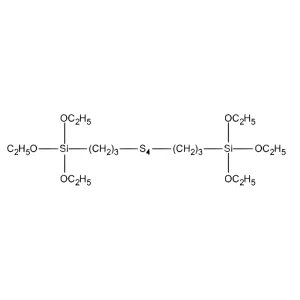
Bis(3-triethoxysilylpropyl) Tetrasulfide (CAS 40372-72-3) Heavy-Duty Vulcanizer
View Product DetailsMercaptosulfur silanes (also designated as mercapto-functional organosilanes) represent a critical class of bifunctional silane coupling agents that bridge inorganic minerals with organic polymer matrices. Chemically characterized by an active sulfhydryl group (-SH) or polysulfidic linkage (-Sx-) attached to an alkoxy-functionalized silyl group, these molecules function through dual-mode reactivity:
In high-stress industrial environments like Erdenet, Mongolia, where heavy-duty equipment operates under sub-zero temperatures and intense abrasive forces, mercaptosulfur silanes deliver critical structural reinforcement. They effectively lower Mooney viscosity during rubber compound processing while dramatically upgrading modulus, tensile strength, and abrasion resistance in the final cured vulcanizate.
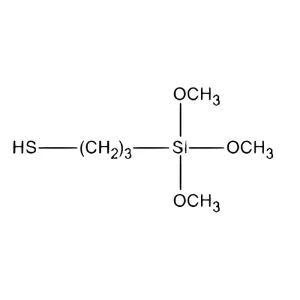
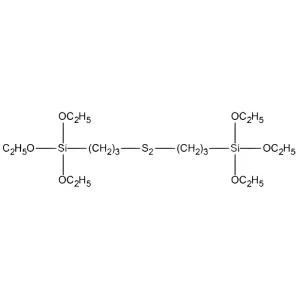
Primary Chemical Structures: HS-(CH2)3-Si(OCH3)3 (3-Mercaptopropyltrimethoxysilane) and [(C2H5O)3Si(CH2)3]2Sx
Refractive Index: 1.4400 – 1.4500 (20°C)
Specific Gravity: 0.990 – 1.095 g/cm³
Purity Benchmark: ≥ 98.5% (Chromatography Standard)
Primary Function: Interfacial adhesion promoter, dispersion aid, crosslinking agent, and dynamic hysteresis suppressor.
Erdenet is the industrial engine of Orkhon Province and one of Central Asia's premier mining powerhouses. Meeting the physical demands of Erdenet’s heavy industry requires high-purity organosilicon additives tailored for severe operational conditions.
Erdenet Mining Corporation (EMC) processes tens of millions of tons of copper-molybdenum ore annually. Heavy-duty steel-cord and fabric conveyor belts operating in these crushing plants require exceptional dynamic fatigue resistance. Mercaptosulfur silanes (specifically Bis(3-triethoxysilylpropyl) tetrasulfide and 3-mercaptopropyltrimethoxysilane) significantly enhance the bonding interface between silica fillers and natural/synthetic rubber, dramatically extending conveyor belt lifespans under intense impact load.
Winter in Erdenet routinely drops to below -40°C. Standard elastomeric components become brittle, cracking under thermal contraction and high shear forces. Silane coupling with mercaptosilanes optimizes crosslinking density and filler network dispersion. This lowers hysteresis heat build-up while retaining elastomeric flexibility and high tear strength in sub-zero operational weather.
Beyond rubber reinforcement, organofunctional mercaptosilanes act as high-efficiency surface modification reagents in mineral beneficiation and slurry transport systems. Their unique sulfur functionality binds selectively to copper and molybdenum sulfide mineral faces, modifying surface hydrophobicity and improving mineral separation efficiencies in complex flotation circuits.
The global market for organosilicone coupling agents is rapidly transitioning toward low-VOC, high-efficiency sulfur-functional silanes driven by eco-friendly green tire regulations, energy-saving industrial rubber goods, and high-voltage cable insulation demands.
| Silane Type & CAS No. | Key Functional Group | Primary Technical Advantage | Recommended Applications in Erdenet | VOC & Processing Profile |
|---|---|---|---|---|
| 3-Mercaptopropyltrimethoxysilane (CAS: 4420-74-6) |
Mercapto (-SH) / Methoxy (-OCH3) | Highest reactivity with silica; fastest coupling kinetic; superior modulus. | Cold-resistant heavy mining treads, precision technical rubber, industrial sealants. | Fast methoxy release; requires precise temperature control during mixing. |
| 3-Mercaptopropyltriethoxysilane (CAS: 14814-09-6) |
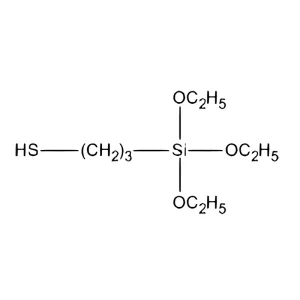
Mercapto (-SH) / Ethoxy (-OC2H5) | Low VOC emission; excellent scorch safety; optimal processing window. | Green tire treads, mining conveyor cover rubbers, heavy machinery bushings. | Eco-friendly ethanol byproduct release; high thermal stability. |
| Bis(3-triethoxysilylpropyl) Tetrasulfide (CAS: 40372-72-3) |
Polysulfide (-S4-) / Ethoxy | Combines silane coupling with sulfur donor vulcanization; maximum tear resistance. | Heavy-duty quarry tires, slurry hose inner liners, high-tension conveyor belts. | Industry standard for silica-filled rubber compounds. |
| Bis(3-triethoxysilylpropyl) Disulfide (CAS: 56706-10-6) |
Disulfide (-S2-) / Ethoxy | Superior thermal stability; higher processing temperatures without premature scorch. | Continuous extrusion profiles, high-speed industrial belts, XLPE cable shielding. | Extended scorch safety; low ethanol emission profile. |
As a global organosilicon powerhouse with $280 million in annual sales (2023), Shandong Boctok Chemical Co. provides Erdenet enterprises with direct-factory cost efficiency, uncompromised quality assurance, and seamless international supply chain logistics.
Founded in 2012, Shandong Boctok Chemical Co. operates integrated chemical manufacturing infrastructure across China. To support escalating global demand for specialized silane coupling agents and organosilicon compounds, Boctok invested US$65 million to construct a state-of-the-art flagship production facility in Bohai Industrial Park, Shouguang City, Shandong Province.
For industrial buyers in Erdenet and across Mongolia, Boctok provides direct rail-to-road logistics routes via northern China transit corridors, guaranteeing rapid delivery timelines and complete customs support.

Achieving maximum performance from mercaptosulfur silanes in severe mining and industrial rubber compounds requires adherence to precise chemistry and mixing protocols.
In silica-reinforced rubber mixing, mercaptosulfur silanes must be added during the first internal mixer (Banbury) stage along with silica filler at temperatures between 135°C and 155°C. This enables rapid in-situ silanization while avoiding thermal degradation of the mercapto or sulfur bonds.
Standard dosage is calculated relative to the specific surface area of the silica filler. Typically, 6% to 10% by weight of silica for 3-Mercaptopropyltrimethoxysilane or Bis(3-triethoxysilylpropyl) tetrasulfide yields optimal coupling density without excess unreacted silane monomer residual.
Alkoxy silanes are moisture-sensitive. Drums must be stored in climate-controlled environments between 5°C and 30°C. In Erdenet’s harsh winters, seal integrity must be inspected to prevent ambient atmospheric moisture from initiating premature silane hydrolysis and condensation inside storage tanks.
Expert technical insights from Shandong Boctok Chemical’s Senior R&D and Application Engineering Department.
3-Mercaptopropyltrimethoxysilane possesses a single active thiol (-SH) group and methoxy functional groups, giving it ultra-fast reaction kinetics with silica and mineral fillers. However, its high reactivity requires precise temperature management to prevent early scorch. Bis(3-triethoxysilylpropyl) tetrasulfide acts as both a silane coupling agent and a sulfur donor, releasing active sulfur at vulcanization temperatures (140°C–170°C). Tetrasulfide is widely preferred for heavy mining conveyor belts in Erdenet because it provides superior tear strength and flex-fatigue resistance under severe mechanical stress.
In sub-zero environments like Mongolian winters (-40°C), traditional filler-filled rubber stiffens due to filler agglomeration and secondary polymer chain physical immobilization. Mercaptosulfur silanes establish covalent chemical bonds between the silica particles and the polymer backbones, dispersing the filler uniformly. This fine dispersion eliminates agglomerate stress concentration points, lowers the compound glass transition temperature dynamics under shear, and prevents micro-cracking under low-temperature dynamic flex loads.
Shandong Boctok Chemical Co. maintains dedicated international logistics protocols for Mongolian enterprise clients. Products can be shipped in standard 200L steel drums (UN rated), 1000L IBC totes, or ISO tank containers. Shipments move via direct rail freight (Erenhot / Zamiin-Uud border transit) straight to Erdenet station, ensuring complete temperature-controlled transit, export documentation, and duty compliance.
During the silanization coupling reaction, alkoxy silanes undergo hydrolysis, releasing their corresponding alcohol. Methoxy silanes release methanol (a volatile organic compound subject to stringent workplace health limits), whereas ethoxy silanes (like 3-Mercaptopropyltriethoxysilane) release ethanol. Ethoxy silanes are significantly safer for operator health during mixing and extrusion operations, compliant with international green tire standards, and produce lower VOC emissions in processing plants.
Explore our full line of specialized silane coupling agents, silicone polymers, petroleum resins, and heavy industrial chemical additives engineered for global markets.
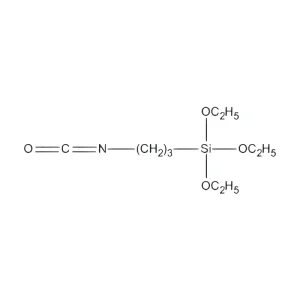
Famous Gamma-isocyanato propyltriethoxysilane Cas 24801-88-5 Suppliers, Products
View Product Details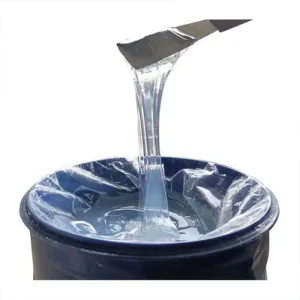
China Room Temperature Vulcanization Methyl 107 Silicone Rubber Rtv 63148-60-7 Adhesives and Sealants CAS 70131-67-8 Companies
View Product DetailsShandong Boctok Chemical Co. was established in 2012 as the primary marketing, sales, and technical export center for Boctok™ domestic and international operations, achieving an annual sales turnover of US$280 million in 2023. The BOCTOK brand specializes in manufacturing and engineering specialized chemicals for high-demanding global markets including Russia, Central Asia (Mongolia), Europe, North America, South America, Australia, Japan, South Korea, India, and Southeast Asia.
Every lot undergoes rigorous GC, FT-IR, and refractive index quality testing to guarantee exact chemical compliance and zero micro-contaminants.
Our US$65 Million Shouguang facility features 6 fully automated remote-control DCS lines ensuring consistent batch-to-batch polymer kinetics.
Our multi-lingual sales and engineering staff provide 24/7 technical advisory, custom synthesis evaluation, and direct logistical tracking.
 Boctok Chemical