Specially customized for the Moscow and Central Russian industrial markets to ensure polymer coupling and dry/wet adhesive integrity.
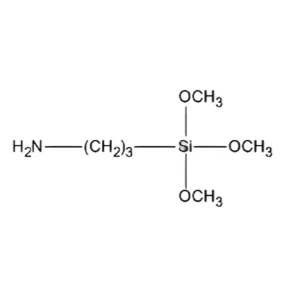
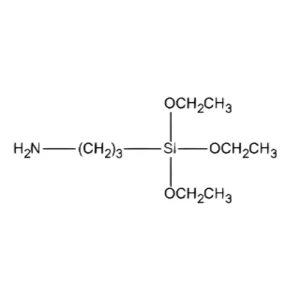
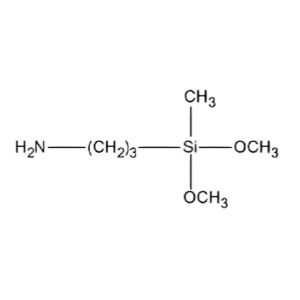
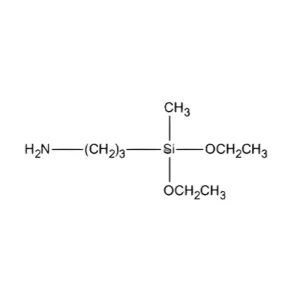
The industrial market of Moscow and its surrounding regions represents the largest chemical consumer sector within the Russian Federation. Over the last several years, the Moscow market has undergone a significant structural shift. As domestic automotive, construction materials, cable production, and microelectronics industries realign their procurement pipelines, the demand for highly specialized raw materials—specifically organic silicon compounds and amino-functional silane coupling agents—has reached unprecedented volumes.
In regions such as Technopolis Moscow, the Lyubertsy industrial zone, and Kapotnya, manufacturers are upgrading formulations to comply with modernized engineering standards. Organosilicon products, acting as molecular bridges, are essential in these structural modifications. They ensure that organic polymers bind irreversibly to inorganic substrates, which is vital for high-performance coatings, automotive glass sealants, XLPE power distribution cable compounds, and casting resins used in construction.
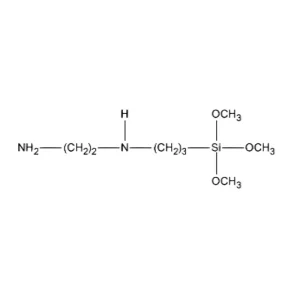
Amino group silanes are bi-functional molecules represented by the general structure Y-R-Si-X3, where Y represents an organic-reactive amino group (such as -NH2 or -NH-CH2-CH2-NH2) and X represents hydrolyzable alkoxy groups (such as methoxy or ethoxy groups linked to the silicon atom). When introduced to a system, these components undergo a multi-step reaction path:
Shandong Boctok Chemical Co. was founded in 2012 as a marketing and sales center for Boctok™ domestic and overseas businesses and achieved sales of US$280 million in 2023. The BOCTOK brand specializes in serving the Russian market, offering bespoke silanes, resins, and agricultural intermediates tailored to complex high-humidity and low-temperature applications.
Boctok has three main product categories, the first core business of organosilicone covers twelve series of silane coupling agents and crosslinkers, including aminosilane, methacrylate silane, epoxy silane, vinyl silane, mercaptosilane, alkyl silane, ethyl silicate, chlorosilane, silane isocyanates, phenyl silane, ureidosilane and serosilane. Boctok also focuses on silicon oil, silicon resin, and silicon rubber, covering high-hydrogen silicone oil, dimethicone, vinyl silicone oil, polyphenylmethyldimethylsiloxane, phenyl silicone oil, silanol silicone oil and OH polymer, alkoxy silicone oil, methyl MQ resin, vinyl VMQ resin, room-temperature vulcanized methyl silicone rubber, 110 methyl vinyl silicone rubber, 120 methyl phenyl rubber. They are widely used in glass fiber, electronics, wind energy, daily necessities, chemical industry, coatings, adhesives, XLPE electric cables and hot water pipes, oil field drilling, textiles, rubber and molding, etc. to improve the quality and performance of the applied products.
Boctok recently invested US$65 million to build a new plant located in Bohai Industrial Park, a provincial chemical industry park in Shouguang City, Shandong Province, to expand the production chain of silane coupling agents, with 6 automatic DCS production lines with an annual output of 30,000 tons of silane coupling agents.
The production lines in the new factory are equipped with automatic remote control system DCS, safety instrument system SIS and other safety equipment. ISO9001 quality management system standards are implemented throughout the process to ensure stable quality.
Treatment facilities have been built to protect the environment, including a waste gas collection and treatment system and a wastewater treatment system, aligning with strict modern ESG metrics.
How Boctok's specialized amino chemistry drives critical industrial lines inside the Russian economic engine.
In the Moscow region, XLPE (Cross-linked Polyethylene) insulation materials rely heavily on aminosilanes to couple inorganic flame retardants like MDH (Magnesium Dihydroxide) or ATH (Aluminum Trihydroxide) with the polyethylene matrix. This achieves robust mechanical resilience and moisture insulation for municipal grids.
Moscow's infrastructural expansion utilizes silicone and polyurethane construction sealants. Aminopropyltrimethoxysilane functions as a critical adhesion promoter for concrete, granite, and aluminum frames, remaining stable through severe sub-zero winter freeze-thaw cycles.
Heavy machinery and cast steel units near the Moscow region leverage furan and phenolic binders. The addition of aminosilanes to the molding sand mix significantly improves the wet tensile strength of molds, minimizing casting defects and reducing overall production waste.
| Chemical Identity | CAS Registry Number | Primary Industrial Use | Boiling Point (°C) | Key Properties |
|---|---|---|---|---|
| 3-Aminopropyltrimethoxysilane | 13822-56-5 | Fiberglass treatment, resin modifier | 194 | Fast hydrolysis, high affinity to silica surfaces |
| 3-Aminopropyltriethoxysilane | 919-30-2 | PU sealants, glass fiber sizing | 217 | Low VOC profile (releases ethanol instead of methanol) |
| 3-Aminopropylmethyldimethoxysilane | 3663-44-3 | Silicone rubber crosslinker | 200 | Highly flexible molecular chain, low shrinkage rate |
| 3-Aminopropylmethyldiethoxysilane | 3179-76-8 | Polymer compound coupling, paints | 85-88 (at 10 mmHg) | Stable adhesion promoter for structural joints |
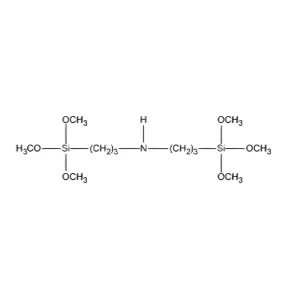
| Bis-[3-(trimethoxysilyl)propyl]amine | 82985-35-1 | Secondary amino silane, hybrid sealants | 152 (at 0.15 mmHg) | High thermal stability, dense crosslink network |
In addition to advanced organosilicon coupling agents, Boctok's Tier II core business centers around high-performance petroleum resins. We have invested in a key hydrocarbon resin manufacturer in China. Currently, three operating hydrocarbon resin factories are strategically located in Zibo, Fushun, and Nanjing. Drawing upon reliable and abundant raw materials from SINOPEC and PetroChina, our advanced production facilities and decades of marketing experience deliver premium materials to both domestic and overseas markets.
These products include C9 hydrogenated resins, C5 hydrocarbon resins, C5 modified C9 hydrocarbon resins, C9 hydrocarbon resins, dicyclopentadiene (DCPD), and methyl cyclopentadiene dimer. These resins are widely incorporated by global and regional companies within the Moscow industrial cluster into hot-melt adhesives, road marking paints, printing inks, and rubber compounding. By leveraging the specific properties of C5/C9 hydrocarbon polymers, manufacturers can optimize tackification, control melt viscosity, and achieve high-temperature shear resistance.
Furthermore, Boctok is active in the agrochemical industry. We produce intermediates and raw materials essential for the formulation of pesticides, fungicides, insecticides, seed treatments, herbicides, and plant growth regulators. This integration guarantees supply chain continuity for chemical formulators operating within the Russian agricultural corridors adjacent to Moscow.
Establishing chemical supply pipelines to Moscow requires specialized logistics networks and compliance with local frameworks. Boctok maintains comprehensive handling systems to support this trade:
Connect directly with our engineering team for free formulation consultation, customized compound testing, and direct pricing on container-load shipments.
Send Inquiry NowTechnical answers to support chemical engineering and procurement processes.
A broad array of silanes and crosslinkers designed to address complex industrial, electronic, and structural challenges.
 Boctok Chemical