In industrial manufacturing, bond failure can damage products, delay production, and increase maintenance costs. Isocyanate Silane offers a practical approach to improving adhesion across demanding material combinations. As a hybrid coupling agent, it combines an isocyanate group with hydrolyzable silane functionality. This structure can connect organic polymers with inorganic surfaces more effectively. The result may include stronger bonding, improved moisture resistance, and better coating durability.
Its value appears in adhesives, sealants, coatings, composites, and modified polymers. On a prepared metal panel, it can help create a more stable interface. In a moisture-curing formulation, its silane groups can support network formation after application. These advantages explain its growing interest among formulation engineers and industrial material suppliers. However, performance is not automatic. That caveat matters.
Moisture content, catalyst selection, surface preparation, and mixing conditions can change the final result. Excessive reactivity may also shorten storage life or complicate processing. Experienced engineers therefore test Isocyanate Silane within the complete formulation, rather than judging it alone. Useful evaluations include lap-shear strength, peel resistance, water exposure, thermal cycling, and aging tests. Results should reflect the intended substrate and production environment.
Safe handling also deserves attention. Isocyanate-containing materials may react with moisture and require suitable ventilation, protective equipment, and current safety documentation. A stronger formulation is not always a better formulation. Pilot trials often reveal unexpected limitations. With controlled testing and realistic performance targets, Isocyanate Silane can become a reliable tool for industrial bonding and surface protection.
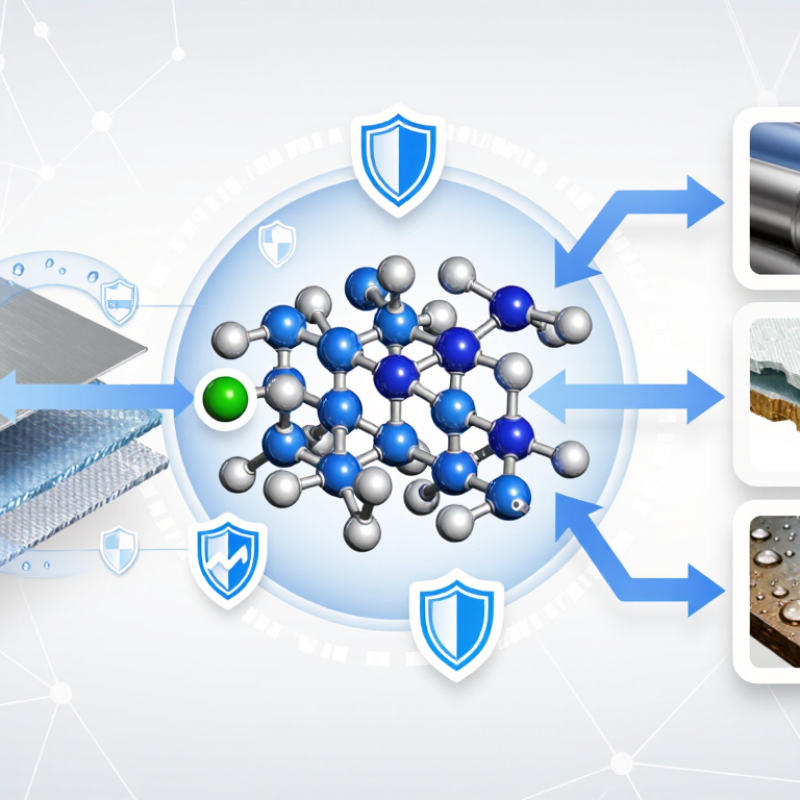
Isocyanate silane is a reactive organosilane containing both an isocyanate group and a hydrolyzable silane group. These two functional groups give the molecule a useful bridge-forming role. The isocyanate group can react with hydroxyl- or amine-containing materials. Meanwhile, the silane group can hydrolyze in the presence of moisture and form bonds with mineral surfaces.
This dual reactivity helps connect materials that normally adhere poorly. In an industrial adhesive, isocyanate silane may improve bonding between polymers, glass, metals, or concrete. A thin treated surface can resist peeling during temperature changes. It may also support better moisture durability in sealants and coatings. Application conditions matter. Water content, curing temperature, and surface cleanliness can strongly affect performance.
It is not a universal solution. A formulation that works on glass may perform differently on aluminum or a filled polymer. Excess moisture can cause premature reactions, while insufficient moisture may slow curing. I have found that careful surface preparation often matters as much as the coupling agent itself. Small laboratory tests should measure adhesion after heat, humidity, and aging exposure. Safety controls are also essential because reactive isocyanate materials may irritate skin and airways. Proper ventilation, protective equipment, and technical documentation should guide industrial handling.
Why Isocyanate Silane Is Ideal for Industrial Applications?
At the molecular level, isocyanate silane acts like a chemical bridge. One end contains an isocyanate group, while the other carries hydrolyzable silane groups. The isocyanate group reacts with hydroxyl groups in polymers, forming stable urethane bonds. It can also react with amines and create urea linkages. That is the hinge.
Meanwhile, moisture converts the silane’s alkoxy groups into silanols. These silanols condense with one another and with hydroxyl-rich surfaces, such as glass, metals, and mineral fillers. The result is a thin interfacial network of Si–O–Si and Si–O–surface bonds. This network improves adhesion, load transfer, and resistance to water-driven separation. In practical formulations, the effect can appear as better filler wetting and fewer weak zones around the interface.
The chemistry is powerful, but it is not perfectly predictable. Humidity, temperature, catalyst level, and surface cleanliness can change reaction speed. Excess moisture may consume isocyanate groups and release carbon dioxide, creating unwanted bubbles. Small details matter. A dry surface may limit silane bonding, while excessive moisture may accelerate premature crosslinking. The molecular model looks tidy, but industrial systems are less tidy. Careful testing remains necessary for curing time, storage stability, and long-term bond strength.
The chart compares approximate average bond dissociation energies commonly used for molecular analysis. The strong Si–O bond supports the formation of durable siloxane networks after hydrolysis and condensation, while the polarized N=C=O group remains highly reactive toward hydroxyl-, amino-, and moisture-containing substrates. This combination helps isocyanate silanes promote adhesion, moisture resistance, and crosslinking in coatings, sealants, adhesives, and composite materials.
Values are approximate average gas-phase bond energies and are intended for molecular-level comparison; actual bond strength varies with molecular environment.
Isocyanate silane combines two useful reactive groups in one molecule. Its isocyanate group reacts with compounds containing active hydrogen, such as hydroxyl or amine groups. The silane group hydrolyzes in moisture and forms strong bonds with mineral surfaces. This dual reactivity improves adhesion between materials that normally resist each other. It can connect polymers, metals, glass, ceramics, and coated substrates.
Its low viscosity supports easier blending and more consistent application. In sealants, coatings, and adhesives, it can improve substrate wetting and reduce interfacial failure. After curing, the resulting siloxane network can provide resistance to water, heat, and outdoor exposure. Practical formulation work also shows that moisture level matters greatly. Too little moisture may slow curing, while excess moisture can shorten storage stability.
Small details matter.
Isocyanate silane also offers useful flexibility in formulation design. It may reduce dependence on separate primers or additional coupling agents. However, it is not a universal solution. Compatibility, dosage, temperature, and surface cleanliness still require testing. Experienced technicians should monitor viscosity changes, cure speed, and bond strength under actual working conditions. Handling deserves care because reactive isocyanate groups can irritate skin and the respiratory system. Proper ventilation, protective equipment, and controlled storage remain essential for reliable industrial use.
Isocyanate silane can improve industrial processes by connecting organic polymers with inorganic surfaces. Its dual reactivity supports stronger adhesion in sealants, coatings, and composite materials. The isocyanate group can react with moisture-sensitive or hydroxyl-containing components. The silane group can hydrolyze and bond with glass, metals, and mineral fillers. This chemistry may reduce primer steps. It can also improve durability under heat, vibration, and changing humidity. Results vary.
In production, this material can simplify processing when dosage, mixing order, and moisture exposure are controlled. Operators may achieve better filler wetting and more consistent adhesion across different substrates. That consistency matters on automated lines, where rework creates measurable cost and delays. In practical formulation trials, small catalyst changes can alter curing speed and open time. Too much accelerator may cause instability. Not every faster cure is better.
Process engineers should test viscosity, storage stability, tensile strength, and bond retention after aging. They should also examine compatibility with pigments, plasticizers, and reactive additives. Isocyanate silane requires controlled storage because unwanted moisture can reduce performance before use. Proper ventilation, gloves, eye protection, and documented handling procedures remain essential. A useful lesson is easy to miss: higher adhesion does not always mean a better product. Excess crosslinking can create brittleness or shorten application time. Pilot-scale testing reveals these trade-offs before full production.
| Performance Dimension | Representative Technical Data | Industrial Process Benefit | Important Considerations |
|---|---|---|---|
| Dual chemical functionality | Contains both a reactive isocyanate group (–NCO) and a hydrolyzable alkoxysilane group. Commercially used structures commonly contain one isocyanate group and two or three alkoxy groups per molecule. | Can react with organic polymers while also forming bonds with inorganic or mineral surfaces, improving compatibility in hybrid formulations. | Reactivity depends on the polymer, substrate chemistry, moisture level, catalyst system, and formulation design. |
| Typical isocyanate content | Representative low-molecular-weight isocyanate silanes commonly contain approximately 16–20% NCO by mass, depending on the alkoxy substituents and molecular structure. | Provides a measurable reactive-site concentration for formulation calculations and crosslinking control. | Exact NCO content must be confirmed from the product specification and verified by an appropriate analytical method, such as dibutylamine back-titration. |
| Moisture-triggered hydrolysis | Alkoxy groups hydrolyze in the presence of water to form silanol groups, which can subsequently condense into siloxane bonds. | Enables ambient-temperature curing and reduces the need for high-temperature processing in sealants, coatings, and adhesives. | Water content, pH, temperature, humidity, and catalyst concentration strongly affect hydrolysis and condensation rates. |
| Chemical bonding to surfaces | Silanol groups can interact with hydroxylated surfaces such as glass, metal oxides, silica, concrete, and mineral fillers. | Improves interfacial adhesion and helps reduce adhesive failure at the substrate boundary. | Surface cleanliness, oxide condition, pretreatment, and available surface hydroxyl groups influence the final bond strength. |
| Reaction with organic polymers | The isocyanate group reacts with active-hydrogen compounds, including hydroxyl- and amine-functional materials, to form urethane or urea linkages. | Supports chemical coupling between silane-containing components and polyurethane, epoxy, acrylic, or other reactive organic systems. | Isocyanates must be protected from unintended contact with water, alcohols, and amines during storage and processing. |
| Cure temperature | Moisture-cured systems can cure at room temperature; elevated temperature generally accelerates reaction kinetics when the formulation and substrate permit it. | Provides process flexibility for room-temperature assembly, heat-sensitive components, and large parts that are difficult to place in an oven. | Room-temperature cure speed is formulation-dependent and should be validated under actual production humidity and temperature conditions. |
| Adhesion improvement | Often used at low additive levels, commonly around 0.5–5% of the formulation, although the optimum level varies significantly by resin and substrate. | Can improve wet adhesion, dry adhesion, and resistance to interfacial separation in filled and unfilled systems. | Excessive dosage may reduce storage stability, increase viscosity, or cause premature crosslinking; optimization by substrate and resin is required. |
| Moisture and water resistance | Siloxane network formation can improve resistance to water ingress and hydrolytic attack at the interface. | Useful for outdoor sealants, construction materials, protective coatings, and assemblies exposed to humidity or intermittent water contact. | Final resistance depends on the complete cured network, filler package, coating thickness, substrate preparation, and exposure conditions. |
| Mechanical reinforcement | Chemical coupling may improve load transfer between a polymer matrix and inorganic fillers or reinforcing surfaces. | Can increase cohesive strength, modulus retention, abrasion resistance, or durability in filled compounds. | Mechanical results are system-specific and should be measured using relevant methods such as tensile, lap-shear, peel, or abrasion testing. |
| Process simplification | Can function as an adhesion promoter, crosslinking component, or reactive coupling agent within one formulation. | May reduce the need for separate primers or multiple surface-treatment steps, helping simplify production workflows. | Primer elimination is not universal; qualification testing is necessary for each substrate, service condition, and regulatory requirement. |
| Thermal stability of the bond | Siloxane-containing interfacial structures generally provide better thermal and environmental durability than purely physical adhesion mechanisms. | Supports longer service life in components exposed to temperature cycling and changing humidity. | Thermal stability depends on the polymer backbone, crosslink density, filler system, and the actual temperature range. |
| Storage and handling sensitivity | Isocyanate-functional silanes are moisture-sensitive and may react with atmospheric water; dry, tightly sealed storage is normally required. | Controlled handling helps preserve NCO functionality and maintains predictable formulation performance. | Use appropriate ventilation, protective equipment, moisture control, and workplace procedures for reactive isocyanate materials. |
| Volatile by-products | Hydrolysis of methoxy- or ethoxy-silane groups can release the corresponding alcohol, such as methanol or ethanol. | Allows moisture-triggered silane chemistry without requiring a separate external curing agent in some systems. | Ventilation, worker exposure limits, flammability controls, and applicable chemical regulations must be considered during processing. |
| Common industrial uses | Used in moisture-curing adhesives and sealants, polymer modification, coatings, composites, mineral-filled compounds, and surface-treatment formulations. | Addresses adhesion, durability, moisture resistance, and compatibility challenges across construction, transportation, electronics, and general manufacturing. | Application suitability must be confirmed through accelerated aging, compatibility, cure-rate, and mechanical-performance testing. |
Note: The numerical ranges shown are representative technical ranges for commonly used isocyanate-functional silane chemistries, not guaranteed values for every grade or formulation. Final performance depends on molecular structure, resin system, substrate, moisture, temperature, and processing conditions.
Isocyanate silane supports strong bonding between organic polymers and mineral surfaces. Its isocyanate group reacts with hydroxyl or amine groups. Its alkoxysilane group hydrolyzes, then forms durable bonds with glass, metals, and concrete. This dual reactivity suits sealants, coatings, adhesives, and fiber-reinforced composites. The 2024 MarketsandMarkets assessment valued the global silane coupling agent market at approximately USD 1.3 billion in 2023. Construction and transportation remained major demand sectors.
Application conditions determine the correct grade. Check functional-group content before comparing products. Higher isocyanate content may improve reactivity, but it can shorten handling time. Moisture-sensitive formulations require sealed storage and controlled humidity. For glass bonding, hydrolysis speed and surface cleanliness matter greatly. For concrete, alkalinity and porosity can change adhesion results. In automotive composites, viscosity and curing temperature affect production efficiency. ASTM and ISO test methods can support more reliable comparisons.
Small details matter.
A practical trial should measure peel strength, tensile adhesion, open time, and aging resistance. The 2023 Global Automotive Lightweight Materials report linked composite growth with continued weight-reduction efforts. This trend creates opportunities for reactive silane systems. However, published market forecasts are not performance guarantees. Laboratory results can shift under real humidity, contamination, or thermal cycling. Selection should therefore combine supplier technical data, independent testing, worker exposure controls, and field experience. I would not choose solely by price or initial adhesion. Long-term durability often reveals the better decision.
It improves adhesion in sealants, coatings, adhesives, and composite materials. It connects polymers with glass, metals, ceramics, and mineral surfaces. Results vary.
Its isocyanate group reacts with hydroxyl or amine groups. Its silane group reacts with moisture and bonds to mineral surfaces. This creates a bridge between different materials.
It may reduce separate primer steps in some formulations. However, surface cleanliness, dosage, and material compatibility still require testing. It is not universal.
Limited moisture may slow curing. Excess moisture can reduce storage stability and shorten working time. Sealed containers and controlled humidity are important.
They should check viscosity, cure speed, open time, bond strength, and aging resistance. Peel strength and tensile adhesion also provide useful evidence. Small changes matter.
Glass needs clean surfaces and suitable hydrolysis behavior. Concrete may vary because of alkalinity and porosity. Contamination can weaken adhesion.
Faster curing may support shorter production cycles. Yet excessive acceleration can cause instability or reduce application time. Faster is not always better.
Begin with laboratory trials using realistic temperature and humidity conditions. Then conduct pilot-scale testing with actual equipment and substrates. Real conditions expose trade-offs.
Use ventilation, gloves, eye protection, and controlled storage. Reactive isocyanate groups may irritate skin and the respiratory system. Handling procedures should be documented.
Compare functional-group content, viscosity, curing temperature, and storage stability. Test compatibility with pigments, plasticizers, fillers, and reactive additives. Price alone is a weak guide.
Isocyanate Silane is a multifunctional chemical material that combines the reactive properties of isocyanate groups with the bonding and moisture-curing capabilities of silane groups. At the molecular level, its isocyanate functionality can react with compounds containing hydroxyl, amino, or other active hydrogen groups, while the silane portion can hydrolyze and form stable bonds with inorganic surfaces. This dual reactivity enables strong adhesion between materials with different chemical characteristics.
Key properties of Isocyanate Silane include excellent adhesion, moisture resistance, flexibility, durability, and compatibility with various polymers and fillers. These advantages can improve processing efficiency, enhance product performance, and reduce the need for multiple additives or separate surface-treatment steps. It is used in applications such as adhesives, sealants, coatings, composites, and polymer modification. When selecting a suitable grade, manufacturers should consider curing conditions, substrate type, reactivity, storage stability, formulation compatibility, and required mechanical or environmental performance.

Boctok Chemical