Phenylsilane is a specialized organosilicon intermediate used in research, advanced materials, coatings, and semiconductor-related chemistry. Its formula, PhSiH3, distinguishes it from phenyltrimethoxysilane and other phenyl-functional silanes. That difference matters. Product identity, purity, packaging, and handling requirements can vary substantially between suppliers.
Public market reports rarely isolate Phenylsilane as a separate category. Grand View Research’s 2024 analysis of the organosilicon market highlights continued demand from electronics, construction, and specialty chemical applications. MarketsandMarkets’ 2024 silicone market report also identifies advanced materials and electronics as important growth areas. These reports provide useful context, but they should not be treated as direct Phenylsilane sales data. This is an important limitation.
Global buyers therefore need more than a supplier directory. They should review current SDS documentation, certificates of analysis, assay methods, impurity limits, batch traceability, and transport capabilities. A reliable supplier should explain moisture control, container selection, storage temperature, and emergency procedures clearly. UN transport guidance and regional chemical requirements also deserve careful review before shipment. Quality can look impressive on paper. The batch history tells more.
This guide examines leading Phenylsilane suppliers through technical capability, manufacturing experience, export reliability, documentation quality, and customer support. It also considers whether suppliers provide consistent specifications across commercial batches. Some rankings remain judgment-based, because public production data is limited. That uncertainty should be acknowledged, not hidden. Buyers should confirm every critical detail directly before placing an order.
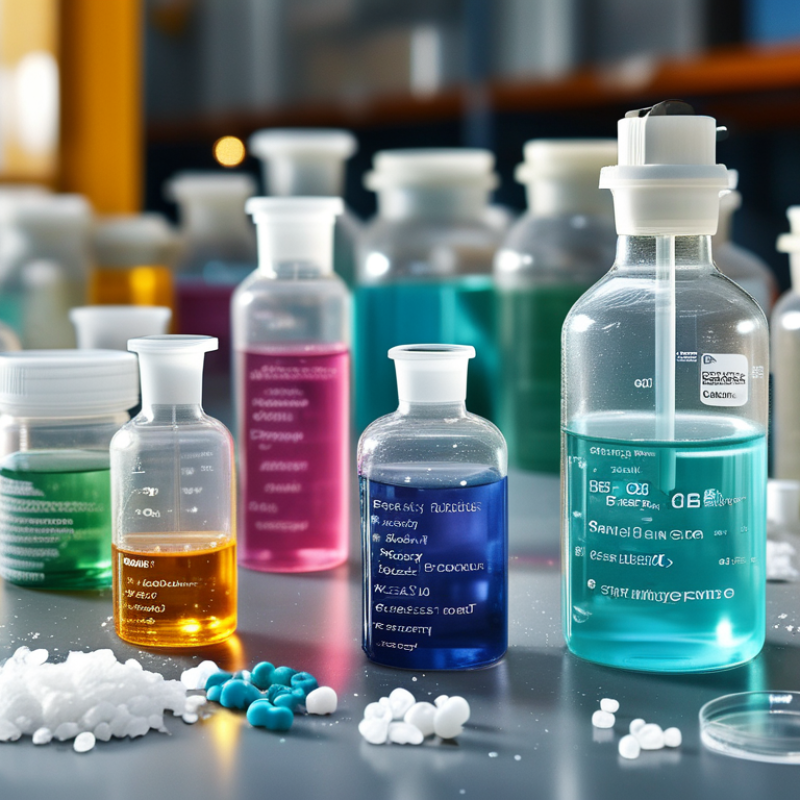
Top Phenylsilane Suppliers for Global Buyers
Phenylsilane: Properties, Uses, and Global Market Role
Phenylsilane is an organosilicon compound with the formula C6H5SiH3. It usually appears as a clear, flammable liquid with a noticeable chemical odor. It is reactive. The silicon-hydrogen bonds support hydrosilylation, reduction, and controlled silicon incorporation in research and manufacturing processes. Moisture exposure can affect its stability, so suitable packaging and storage conditions are essential.
Its applications reach across specialty materials, laboratory synthesis, and advanced coating development. Researchers use phenylsilane to introduce phenyl groups into silicon-based structures. These structures may improve thermal behavior, surface performance, or chemical resistance. In some processes, phenylsilane also serves as a reducing or functionalizing reagent. Actual performance depends on purity, reaction design, and handling discipline. Results are not always identical between laboratories.
For global buyers, supplier evaluation should include assay data, impurity profiles, batch consistency, packaging integrity, and documentation quality. A certificate of analysis is useful, but it does not tell the whole story. Buyers should also examine transport capability, technical communication, and support for regional compliance requirements. Small details matter. A damaged seal or unclear storage record can create delays and unexpected losses. The market is expanding with demand for high-performance silicon materials, although public data remains uneven across regions. Responsible procurement therefore requires technical judgment, realistic lead-time planning, and direct verification of product information.
| Category | Data Dimension | Typical Data | Global Buyer Relevance |
|---|---|---|---|
| Chemical Identity | Chemical name | Phenylsilane | The standard commercial and technical name used for sourcing, specification, and regulatory documentation. |
| Chemical Identity | CAS Registry Number | 694-53-1 | A globally recognized identifier that helps buyers distinguish phenylsilane from related organosilicon hydrides. |
| Chemical Identity | Molecular formula | C6H8Si | Confirms the composition of the material during technical review and quality-control procedures. |
| Chemical Identity | Molecular weight | 108.22 g/mol | Useful for reaction design, stoichiometric calculations, inventory planning, and analytical verification. |
| Physical Properties | Physical form | Colorless to pale-yellow liquid | Appearance inspection is a basic incoming-quality check; unusual color or visible matter may indicate contamination or degradation. |
| Physical Properties | Boiling point | Approximately 120–121 °C at atmospheric pressure | Supports process design, distillation assessment, storage planning, and evaluation of volatility during handling. |
| Physical Properties | Density | Approximately 0.88 g/cm³ at room temperature | Important for filling calculations, drum or cylinder capacity planning, and conversion between mass and volume. |
| Reactivity and Safety | Functional group | A phenyl group bonded to a silicon trihydride unit, C6H5SiH3 | The Si–H bonds provide useful hydrosilane reactivity for synthesis, reduction, and silicon-containing material development. |
| Reactivity and Safety | Moisture sensitivity | Reactive with water or moisture and may generate flammable hydrogen gas | Buyers should require moisture-controlled packaging, dry handling procedures, compatible equipment, and a current safety data sheet. |
| Reactivity and Safety | Flammability profile | Flammable liquid and vapor; keep away from ignition sources | Storage and transport require effective ventilation, grounding, temperature control, and procedures suitable for flammable liquids. |
| Primary Uses | Organic and organosilicon synthesis | Specialty intermediate and reactive building block | Used in research and industrial synthesis where both aromatic functionality and silicon–hydrogen reactivity are required. |
| Primary Uses | Reduction chemistry | Hydrosilane reagent for selected reduction reactions | Its Si–H bonds can participate in catalytic or stoichiometric reductions, depending on the substrate and reaction conditions. |
| Primary Uses | Silicon-containing materials | Precursor for specialty polymers, coatings, and surface-modification research | Demand is linked to the development of advanced materials, functional coatings, and laboratory-scale organosilicon technologies. |
| Primary Uses | Hydrosilylation research | Reactive Si–H component for addition reactions with unsaturated compounds | Suitable for process-development and formulation work where controlled incorporation of a phenyl-substituted silicon unit is needed. |
| Supplier Evaluation | Purity specification | Set according to application; high-purity grades are commonly required for research and sensitive synthesis | Buyers should compare assay method, impurity profile, water content, stabilizer status, and batch-to-batch consistency rather than purity alone. |
| Supplier Evaluation | Documentation package | SDS, certificate of analysis, specification sheet, batch or lot traceability, and transport information | Complete documentation reduces customs delays, supports regulatory review, and improves internal quality assurance. |
| Supplier Evaluation | Packaging expectation | Sealed, moisture-resistant containers with suitable headspace and protective handling controls | Packaging integrity is critical because exposure to moisture can affect product quality and increase handling risk. |
| Global Market Role | Market position | Specialty, relatively low-volume organosilicon intermediate | Purchasing decisions are generally driven by technical performance, purity, reliable supply, compliance, and safe logistics rather than commodity-scale volume. |
| Global Market Role | Regional demand drivers | Chemical research, advanced materials, specialty coatings, pharmaceuticals, and electronics-related development | Demand tends to follow research activity, specialty manufacturing capacity, and investment in high-performance silicon-containing materials. |
| Global Market Role | Key sourcing risks | Moisture exposure, flammable-liquid logistics, limited qualified production capacity, and variable lead times | Global buyers should qualify alternative supply routes, verify export requirements, maintain safety stock, and confirm shelf-life conditions before ordering. |
: Suppliers are commonly found in East Asia, Europe, and North America. East Asian sources may offer flexible batch sizes. European suppliers often emphasize documentation and consistency. North American suppliers may provide responsive technical support. Regional patterns can mislead.
Request a current Certificate of Analysis and a 16-section Safety Data Sheet. The certificate should list assay, moisture, density, appearance, and test methods. Confirm that lot numbers match the container, invoice, and documents. A certificate alone is not proof.
Ask how purity was measured. Gas chromatography or nuclear magnetic resonance may support purity testing. Request samples from several production lots. Independent testing helps with critical applications. One attractive sample proves little.
Moisture exposure may affect product stability. Suppliers should use tightly sealed containers. Check container compatibility, storage temperature, shelf life, and seal condition. Keep handling instructions with the shipment. Small errors spread.
The quoted price is only one part of the cost. Customs review, insurance, special transport, and port delays may add expenses. A low-priced shipment can become expensive. Compare landed cost, not only product price.
Confirm the shipping route, insurance responsibility, lead time, and contingency stock. Holiday periods and limited raw materials can extend delivery schedules. Large buyers may negotiate directly with manufacturers. Smaller buyers may prefer regional distributors. Plans can fail.
A practical scorecard can assess quality consistency, documentation, landed cost, and delivery performance. One possible weighting is 35%, 25%, 20%, and 20%. Adjust the percentages for actual production risks. Review performance across several orders. The weighting is not universal.
No. Certification shows a quality system may exist. It does not guarantee consistent chemical quality. Ask about audit scope, laboratory capability, retention samples, and deviation records. Check document revisions before shipment. I might trust paperwork too quickly.
Phenylsilane is a valuable organosilicon compound used in specialized chemical synthesis, advanced materials, and research applications. Its chemical properties, handling requirements, and performance characteristics make supplier reliability especially important for global buyers. When evaluating potential suppliers, buyers should consider product purity, production consistency, technical expertise, supply capacity, packaging quality, communication, and delivery reliability. A dependable supplier should also provide clear specifications, safety information, batch documentation, and appropriate quality-control records.
Major supplier regions may differ in manufacturing capabilities, export experience, lead times, and market practices. Buyers should compare offers carefully by reviewing product grades, testing methods, minimum order quantities, shipping terms, payment conditions, technical support, and after-sales service. Regulatory compliance and complete documentation are essential for safe and efficient international trade. By assessing these factors systematically, global buyers can select a Phenylsilane supplier that offers a balanced combination of quality, transparency, dependable logistics, and long-term cooperation potential.

 Boctok Chemical