Amino Silane Reagent is a functional organosilicon compound that links inorganic surfaces with organic polymers. Its structure usually contains hydrolyzable alkoxy groups and a reactive amino group. This dual chemistry makes it valuable in epoxy adhesives, glass-fiber composites, mineral-filled plastics, coatings, and sealants.
E. P. Plueddemann, a leading authority on silane coupling agents, wrote, “A coupling agent is a substance capable of reacting with both organic and inorganic materials.” His definition explains the practical role of Amino Silane Reagent. During application, alkoxy groups hydrolyze in the presence of moisture. They then bond with hydroxyl-rich surfaces, such as glass, silica, and aluminum compounds. The amino group can react with epoxy, polyurethane, or other resin systems. Small changes matter. Water content, pH, dosage, and drying temperature can alter performance significantly.
Market context supports this chemistry. Grand View Research and MarketsandMarkets describe the global silane coupling agents market as a growing industry, with projected annual growth generally reported near 5% to 7%. Their estimates differ because product categories and regional definitions are not identical. That difference deserves attention. It shows why market figures should not be treated as absolute facts. More importantly, manufacturers continue seeking better adhesion, lower moisture sensitivity, and improved composite durability.
In practice, Amino Silane Reagent is not a universal solution. It may improve bonding, but poor surface preparation can still cause failure. Safe handling, controlled storage, and supplier technical data remain essential for reliable results.
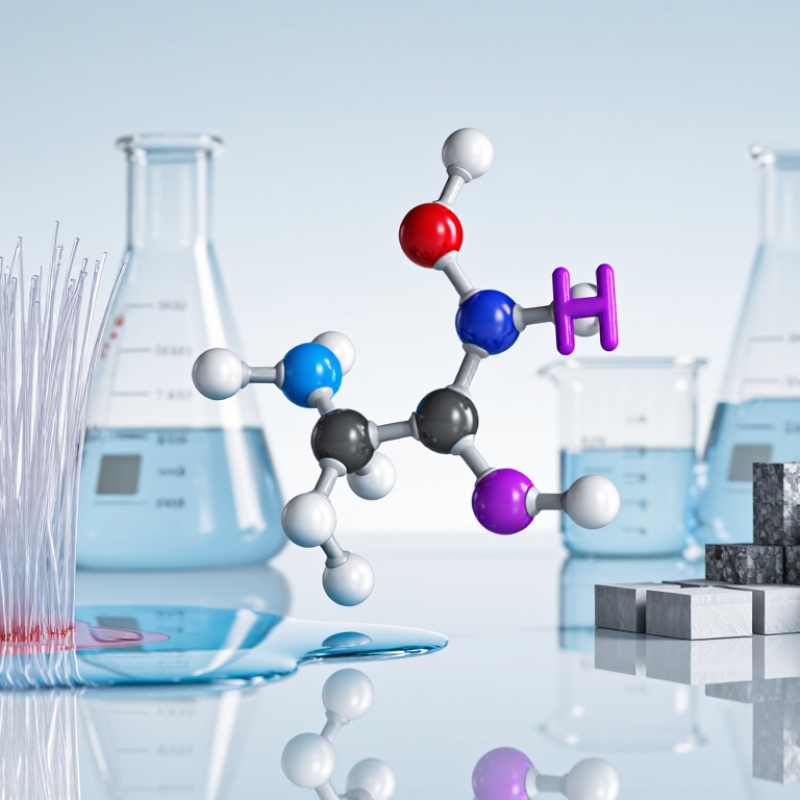
An amino silane reagent contains an amino group linked to hydrolyzable alkoxy silane groups. A common structure uses a propyl spacer between nitrogen and silicon. The amino group reacts with resins, polymers, or mineral surfaces. The alkoxy groups hydrolyze when exposed to water. They then form silanol groups and bond with glass, silica, metals, or other inorganic surfaces. This dual reactivity makes amino silanes effective coupling agents.
Moisture matters greatly. Too little water slows hydrolysis, while excess water can cause premature condensation. In formulation work, even a damp storage drum can change viscosity and adhesion. The chemistry is useful, but not foolproof.
The 2024 MarketsandMarkets Silane Market report estimated the global market at over USD 2 billion and forecast continued growth through 2029. Its analysis identifies adhesives, coatings, rubber, and composites as major application areas.
In coatings, amino silanes can improve wet adhesion and reduce interfacial failure. In glass-fiber composites, they help connect an inorganic surface with an organic resin.
A practical test often compares peel strength before and after humidity exposure. Cure temperature, pH, solvent choice, and water content should be recorded. Results can vary between laboratories. That limitation deserves attention. The International Organization for Standardization also emphasizes controlled conditioning for mechanical and adhesion testing, supporting more reliable comparisons.
Amino silane reagents connect organic materials with mineral surfaces. Their alkoxy groups hydrolyze in moisture, then form siloxane bonds with glass, silica, ceramics, or metal oxides. The amino group remains available for bonding with resins, polymers, or acidic surface sites. Results depend strongly on water content, pH, temperature, and curing time.
APTES, or 3-aminopropyltriethoxysilane, is a common choice for surface treatment and adhesion improvement. Its triethoxy groups usually hydrolyze at a moderate rate, allowing practical handling in many formulations. APTMS contains methoxy groups instead. It often reacts faster with moisture, which can improve surface coverage but reduce working time. In a workshop, this difference appears quickly: an APTMS solution may become cloudy sooner when water or humidity is poorly controlled.
Diamino silanes contain two amino functionalities, giving them greater polarity and more opportunities for interaction. They can improve adhesion, crosslinking, or compatibility in demanding resin systems. However, more reactive does not always mean better. Excess material may create a weak, uneven layer instead of a durable interface. Cleaning the substrate, measuring moisture carefully, and testing the cured surface remain essential. A simple water-drop test can reveal poor wetting, although it cannot replace chemical analysis. I have found that small formulation changes sometimes matter more than the silane type itself.
Amino silane reagents carry an amino group and hydrolysable alkoxysilane groups. In mildly acidic water, protonation makes alkoxy leaving groups more reactive. Water then forms silanol groups and releases alcohol. The mixture changes quietly. Hydrolyzed molecules can attach to glass, minerals, or oxidized metals. They can also condense with neighboring silanols, creating Si–O–Si networks. This dual reactivity supports primers, mineral fillers, coatings, and composite interfaces.
Practical control matters more than a fixed recipe. Many formulators begin near pH 4–5, using diluted organic or mineral acid. This range often supports hydrolysis while limiting premature gel formation. Gentle mixing, clean water, and short aging can improve consistency. A 2024 industry report estimates silane coupling-agent demand will grow by approximately 6% annually through 2030. The report links this growth to construction, electronics, and polymer composites. Source: 2024 Global Silane Coupling Agents Market Outlook. Forecasts guide planning, not formulation.
Amino silanes may raise the bath’s pH during hydrolysis. Measure the solution, not only the starting acid level. Condensation usually accelerates toward neutral pH, especially on warm surfaces. Too much water can weaken interfacial coverage. Too little water may leave alkoxy groups unreacted. A 2023 technical review on silane coupling agents reports that adhesion depends strongly on pretreatment and curing conditions, not silane dose alone. That finding deserves attention. A clear solution may still produce a weak bond. Small trials, contact-angle checks, and pull-off testing can expose this gap before scale-up.
Amino silane reagents are coupling agents used to improve adhesion between inorganic materials and organic polymers. Their amino groups can react with suitable resin components, while their silane groups bond with mineral surfaces. This dual activity is useful in sealants, coatings, adhesives, and filled polymer systems. In practice, the reagent may help improve wetting, filler dispersion, moisture resistance, and bond strength.
For industrial formulations, a typical starting dosage is 0.5–2 wt%. This percentage is often calculated against the total formulation, but the calculation basis must be documented clearly. At 0.5 wt%, the silane may support adhesion without strongly changing viscosity. Near 2 wt%, performance can improve in demanding systems, yet excess material may increase odor, instability, or unwanted side reactions. More is not always better.
A practical trial should begin near 0.8–1.0 wt%, followed by controlled testing. Add the reagent slowly under consistent mixing conditions. Check viscosity, gel time, storage stability, and adhesion after curing. Humidity also matters. A damp filler or open mixing tank can change results. The 0.5–2 wt% range is useful, but it is not a fixed recipe. A neat calculation can still mislead. Resin type, filler loading, surface treatment, and cure chemistry may require adjustment. Some formulations perform better below the expected range, while others need a higher level after aging tests. Record every change, including mixing temperature and addition order.
Typical amino silane dosage in industrial formulations is approximately 0.5–2.0 wt%, depending on the substrate, resin system, and required adhesion performance.
The chart shows representative formulation setpoints within the commonly used 0.5–2.0 wt% range. Amino silanes are often used as adhesion promoters, coupling agents, or surface modifiers in composite materials, mineral-filled polymers, coatings, adhesives, and sealants. Final dosage should be optimized through compatibility and performance testing.
Amino silane reagents are adhesion promoters with two active functions. Their alkoxy groups bond with hydroxyl-rich surfaces, such as glass, silica, and mineral fillers. Their amino groups interact with epoxy, polyurethane, and other polymer matrices. This dual reaction improves wetting and reduces interfacial failure. The chemistry is powerful, but not forgiving.
In fiberglass, amino silane helps resin wet each filament evenly. A thin treatment layer can reduce pull-out during bending or impact. In filled polymers, it links mineral particles to the surrounding resin, improving stiffness and lowering moisture-driven separation. Coating formulators also use it on glass, metal oxides, and concrete-like surfaces. Practical dosage often remains low, commonly around 0.5–2% of filler weight, depending on surface area and moisture. Too much can create a weak, water-sensitive layer.
MarketsandMarkets’ 2024 Silane Coupling Agents report projects the sector to grow at roughly 7% annually through 2029. That trend reflects demand from composites, coatings, construction materials, and engineered plastics. Fortune Business Insights also identifies composites and coatings as major growth areas in its 2024 market analysis. However, laboratory strength does not guarantee factory performance. Hydrolysis time, pH, drying temperature, and filler moisture can change results sharply. I would not select an amino silane from tensile data alone. A short humidity-aging test is often more revealing. Mistakes still happen.
| Application Area | Typical Substrate or Matrix | How the Amino Silane Works | Common Application Method | Typical Starting Dosage | Main Performance Benefits | Important Processing Notes |
|---|---|---|---|---|---|---|
| Polymer Adhesion Promotion | Epoxy, polyurethane, acrylic, and other polar polymer systems | The amino group can react with or interact strongly with resin functionality, while the hydrolyzable silane groups form bonds with hydroxylated mineral or glass surfaces. | Add to the resin formulation, apply as a primer, or pretreat the inorganic surface before bonding. | Approximately 0.5–3 parts per hundred parts of resin as an initial formulation range; optimize by testing. | Higher wet and dry adhesion, improved interfacial bonding, and better resistance to moisture-related bond loss. | Excess silane may increase moisture sensitivity, alter cure behavior, or reduce storage stability. |
| Fiberglass Sizing | Glass fibers used in reinforced thermoplastics, thermosets, and composite laminates | The silane portion bonds to the glass surface, while the amino functionality improves compatibility with suitable polymer matrices. | Apply from an aqueous or hydroalcoholic sizing bath, followed by drying and, when required, heat treatment. | About 0.2–1.0% active silane based on glass-fiber weight is a common development range. | Improved fiber wet-out, composite strength, reduced filament breakage, and better retention of properties after humidity exposure. | The silane must be compatible with the full sizing package, including film former, lubricant, antistatic agent, and processing conditions. |
| Mineral and Filler Treatment | Silica, glass powder, alumina, calcium carbonate, clay, and other hydroxylated inorganic fillers | Hydrolyzed silanol groups condense with surface hydroxyl groups, creating a coupling layer that improves filler–polymer interaction. | Spray treatment, wet treatment, dry blending, or premixing into a liquid resin system. | Approximately 0.5–2.0% active silane based on filler weight; porous or highly reactive fillers may require more. | Better dispersion, lower filler–matrix interfacial voids, improved mechanical strength, and reduced water uptake. | Surface area, moisture content, particle size, and filler porosity strongly affect the required dosage. |
| Coatings and Primers | Metal oxides, glass, ceramics, concrete, mineral panels, and previously coated surfaces | The silane forms a reactive interfacial layer that can connect an inorganic surface with an organic binder or topcoat. | Use as a diluted primer, co-binder additive, or surface pretreatment before coating application. | Usually 0.5–2.0% in a prepared treatment solution, depending on solids content and surface energy. | Improved coating adhesion, reduced delamination, better abrasion resistance, and enhanced wet adhesion. | Cleanliness and surface preparation are critical; oils, dust, and weak boundary layers can limit performance. |
| Sealants and Adhesives | Moisture-curing polyurethane, epoxy, acrylic, and hybrid adhesive formulations | The amino group contributes to interaction or reaction with the organic binder, while the silane groups couple to glass, minerals, and metal oxides. | Blend into the adhesive, use in a primer, or apply as a separate surface treatment. | Approximately 0.5–5.0% of the formulation for development screening, subject to cure and viscosity testing. | Improved initial grab, substrate adhesion, cohesive strength, and durability under humid conditions. | Amino silanes can react with moisture and acidic or electrophilic ingredients; packaging and shelf-life testing are necessary. |
| Water-Based Surface Treatment | Glass, silica, concrete, mineral fillers, and other surfaces containing hydroxyl groups | Controlled hydrolysis produces silanol groups that adsorb to and condense with the inorganic surface during drying. | Prepare a diluted aqueous solution, adjust pH mildly acidic, apply, allow hydrolysis, and dry thoroughly. | Commonly 0.5–2.0% silane in water or water/alcohol solution for initial trials. | Uniform surface coverage, improved bonding to subsequent organic layers, and easier handling of treated mineral surfaces. | A mildly acidic pH, often around 4–5, is commonly used to support hydrolysis; solution stability should be verified. |
| General Chemical Characteristics | Amino-functional organosilane reagents with one organic amino group and hydrolyzable alkoxy groups | The molecule acts as a molecular bridge between organic polymers and inorganic surfaces through dual chemical functionality. | Formulation additive, primer, aqueous pretreatment, filler treatment, or fiber-sizing component. | The optimum level depends on surface area, reactive groups, moisture, curing conditions, and target durability. | Improved interfacial adhesion and more stable composite or coating performance. | Results are formulation-specific; dosage, pH, hydrolysis time, drying temperature, and storage conditions should be validated experimentally. |
They connect organic resins with mineral surfaces. Their alkoxy groups bond with glass, silica, ceramics, and metal oxides.
Moisture triggers hydrolysis and siloxane bond formation. Too much water can shorten working time and create uneven layers.
Ethoxy-based types usually react more moderately. Methoxy-based types may react faster, causing a solution to turn cloudy sooner.
They provide two amino functionalities. This can improve polarity, adhesion, crosslinking, and compatibility with certain polymers.
No. Excess material may form a weak, water-sensitive layer. More reactive does not always mean better.
A thin treatment helps resin wet each filament evenly. It can reduce filament pull-out during bending or impact.
A practical starting range is often 0.5–2% of filler weight. The best amount depends on surface area and moisture.
A water-drop test can show poor wetting quickly. Humidity aging is more revealing, but neither test replaces chemical analysis.
Control substrate cleaning, water content, pH, temperature, drying, and curing time. Small changes can matter more than the silane type.
Not reliably. Production moisture, mixing conditions, and curing differences may change the final result. I would test under realistic conditions.
An Amino Silane Reagent is a functional coupling agent built from amino groups connected to hydrolyzable alkoxy silane groups. Common types include aminopropyl trialkoxy silanes and diamino silanes, with their specific functionality influencing reactivity, compatibility, and bonding performance. When mixed with water, these compounds undergo hydrolysis, converting alkoxy groups into reactive silanol groups. Under mildly acidic conditions, the silanols can then condense to form durable siloxane networks and bond effectively with mineral or inorganic surfaces.
In industrial formulations, amino silane reagents are typically used at concentrations of approximately 0.5–2 wt%, depending on the material system and desired performance. They are widely applied to improve adhesion between polymers and substrates such as fiberglass, mineral fillers, metals, and coatings. By enhancing interfacial bonding, they can support better mechanical strength, moisture resistance, dispersion, and long-term durability in composites, sealants, adhesives, and protective surface treatments.

Boctok Chemical